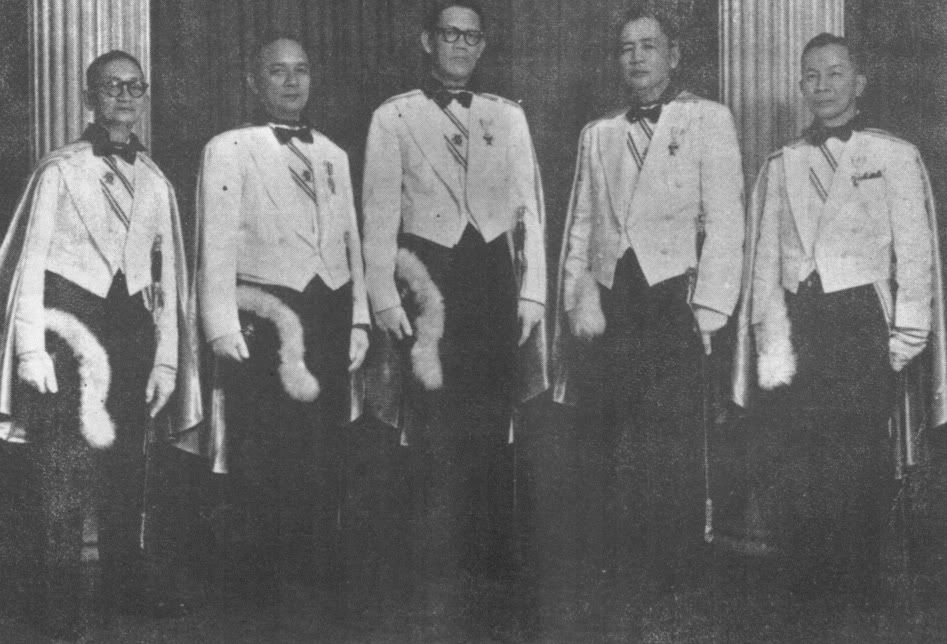
I was greatly surprised when in July 1946, I was told to join as member of the first Philippine Agricultural Mission to the United States with Prof. De Leon of the UPCA and Atty. C. Crucillo of the NEC. The mission is a counterpart of the American Agricultural Mission to the Philippines after the liberation. It was so glorifying for it is the dream of every Filipino to see America, as if it is like the golden sun’s rays which had pierced through the thick clouds of sufferings, doubts and apprehension after four years of deprivation under the Japanese Occupation.
There was no commercial boat then nor plane after the Liberation so our party with sixteen other pensionados and 1,400 returning American soldiers from Japan bombarded the USS Freedom. Upon reaching San Francisco, we were billeted in a hotel where we were shed-off with borrowed army clothes and shoes with the genuine “Americana” civilian attire. In USDA, Washington D.C., I was asked as to what I wanted for a study tour. As representative from the Department of Agriculture, I replied that I wanted to see animal production in the farms and ranches to marketing and processing of meat in the meat packing plants in Chicago and Kansas City. Experimental stations in Cornell, Wooster, Ohio, Missouri, Louisiana, Hudgins Ranch, and Las Cruces and King Ranch were included in my itinerary. It was in Pennsylvania where I was mistaken for a Chinese probably because of my eyes which my mother gave me, for after lunch in a small restaurant, I was handed a Chinese “paper” to read.
From Las Cruces in New Mexico, I was called back at Washington D.C., where I orally reported in a seminar held in the USDA on the animal situation after the devastation during the Japanese Occupation, and on my observation studies in the ranches and experiment stations I had visited.
It was in Hudgins Ranch, Louisiana where I saw the beautiful Brahman cattle, manner of transporting cattle by overland and overseas, the Sta. Gerthrudis cattle in Texas on a million acre pasture land, the
Palomino horses and how they are managed and fed with Blue Grass. In Las Cruces are the Hereford, the poor man’s cattle they call it, that thrives only in Gramma, the only grass that could thrive in a semi-desert where cactus was the only available forage before.
After almost six months of observation studies, in late December of 1946, we crossed the continent back to San Francisco. While waiting for almost ten days for an army plane to Honolulu, I had also helped Dr. Austria in shipping by plane the 100,000 baby chicks which the US government had donated to the Philippines.
The white birds which later on abound in the poultry farms was the beginning of the poultry industry in our country.
In Honolulu, we were met by the USDA technical experts on poultry and dairy industry who showed us the Holstein cattle before and after treatment for liver flukes with amazing results after the treatment with Phenothyzine. It was in Hawaii where we enjoyed again the Filipino food like
“Tinapa”,
Sinangag, and Chocolate.
After ten years, the triumvirate, the three members of the First Philippine Agricultural Mission to the United States in 1946, met again in the UP College of Agriculture in Los Banos on the occasion of the Loyalty Day regularly celebrated every year, with Prof. De Leon, Director C. Crucillo, pf the NEC, and myself.